
Professional services website design for firms that sell expertise
When you sell expertise, your website is the first meeting. A prospective client reads your people’s profiles, skims your thinking and looks for work like theirs before deciding whether to call.



















Why work with Nirmal Gyanwali on professional services website design?
Graduates read your website too, before deciding whether to apply. And increasingly an AI assistant is asked “who are the best risk consultants in Sydney?” and answers from whichever firm states its expertise most clearly.
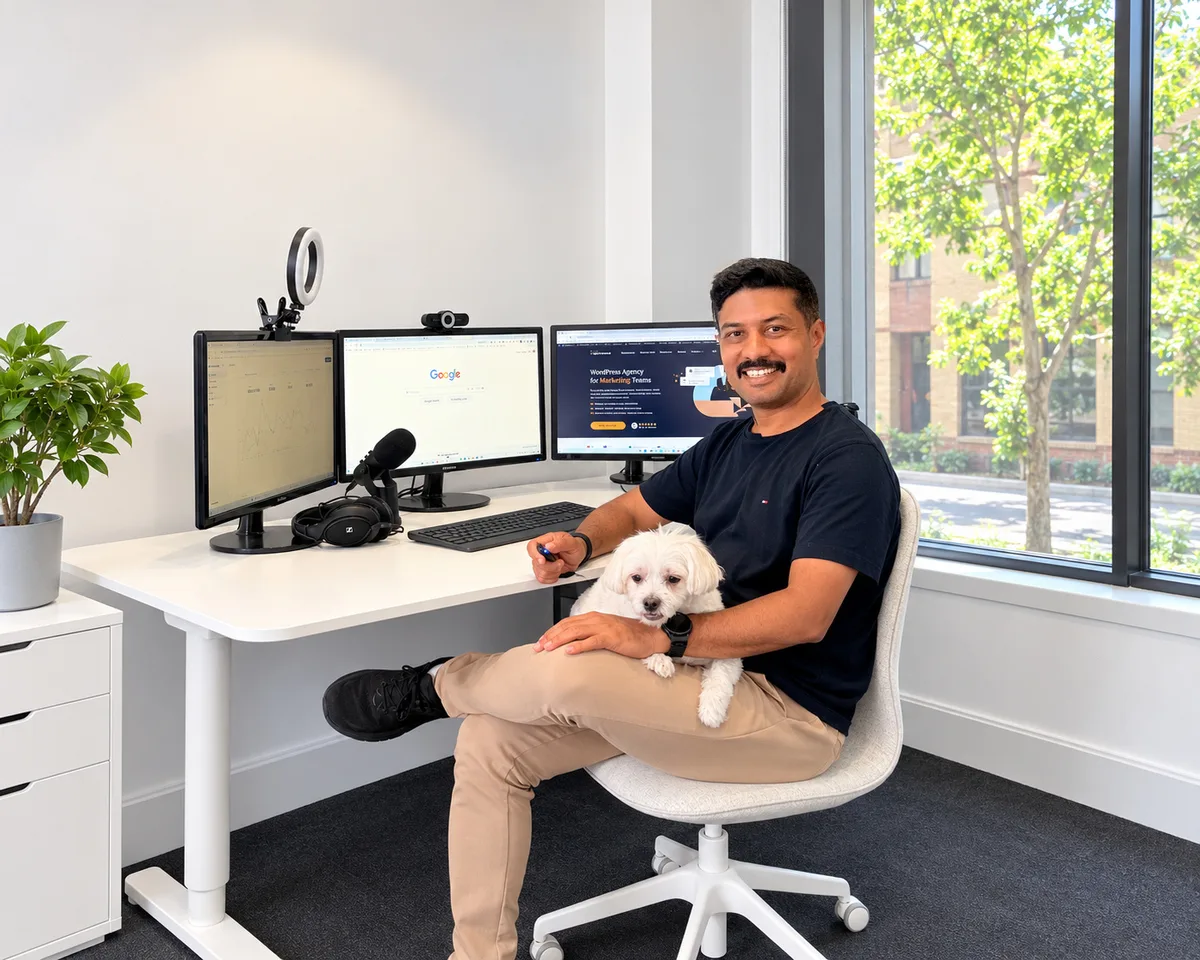
I’m Nirmal Gyanwali, Founder and CEO of WP Creative, and I built PostCliq, which WP Creative operates. I run a professional services firm myself, so I know the problem from the inside: the expertise is in people’s heads and the website says “trusted advisors”. My team designs and builds websites for consultancies, advisory firms, design and engineering practices and recruiters.
The hardest calls I take are from firms with half a website and a developer who has stopped answering. One advisory firm came to my team in exactly that spot: the developer it had hired for the build walked away part way through. My team unpicked what had been done and finished what hadn’t, and the firm has come back to us for more work since. The problem wasn’t one person. It was an arrangement where nobody was committed past the build.
What does a professional services website need to do?
A professional services website needs to prove expertise through people, evidence and thinking, then make it easy to start a conversation. That means credible profiles, case evidence by service or sector, current insights and a careers section that attracts the people you need. Every page should make the next step obvious: call, book or apply.
01
Be found
when clients search for the expertise, and when AI assistants are asked who the specialists are.
02
Be chosen
because people pages, case evidence and insights prove you’ve solved this problem before.
03
Grown
a site your marketing team can update weekly and keep improving, with candidate and client data handled properly.
What we hear from professional services firms
01
“Our website says nothing specific.”
Every firm in the sector claims to be “client-focused” and “trusted”.
02
“Our people pages are outdated.”
Partners who left two years ago, new hires missing.
03
“Careers is a mess.”
Job ads typed twice, once in the recruitment system and once on the website.
04
“Our developer walked away.”
They left mid-build: half a site, no handover, a launch date already announced.
05
“We can’t publish our thinking.”
Insights wait weeks because the site is hard to edit.
06
“Divisions need their own look.”
But it should still feel like one firm.
What clients check before they call
What the client looks for
- People Real experience, credentials, sector focus
- Services Exactly what you do, for whom
- Case evidence Work like theirs, with results
- Insights Current thinking on their problem
- Careers Whether to apply
- Contact Who to call about what
What an AI assistant needs
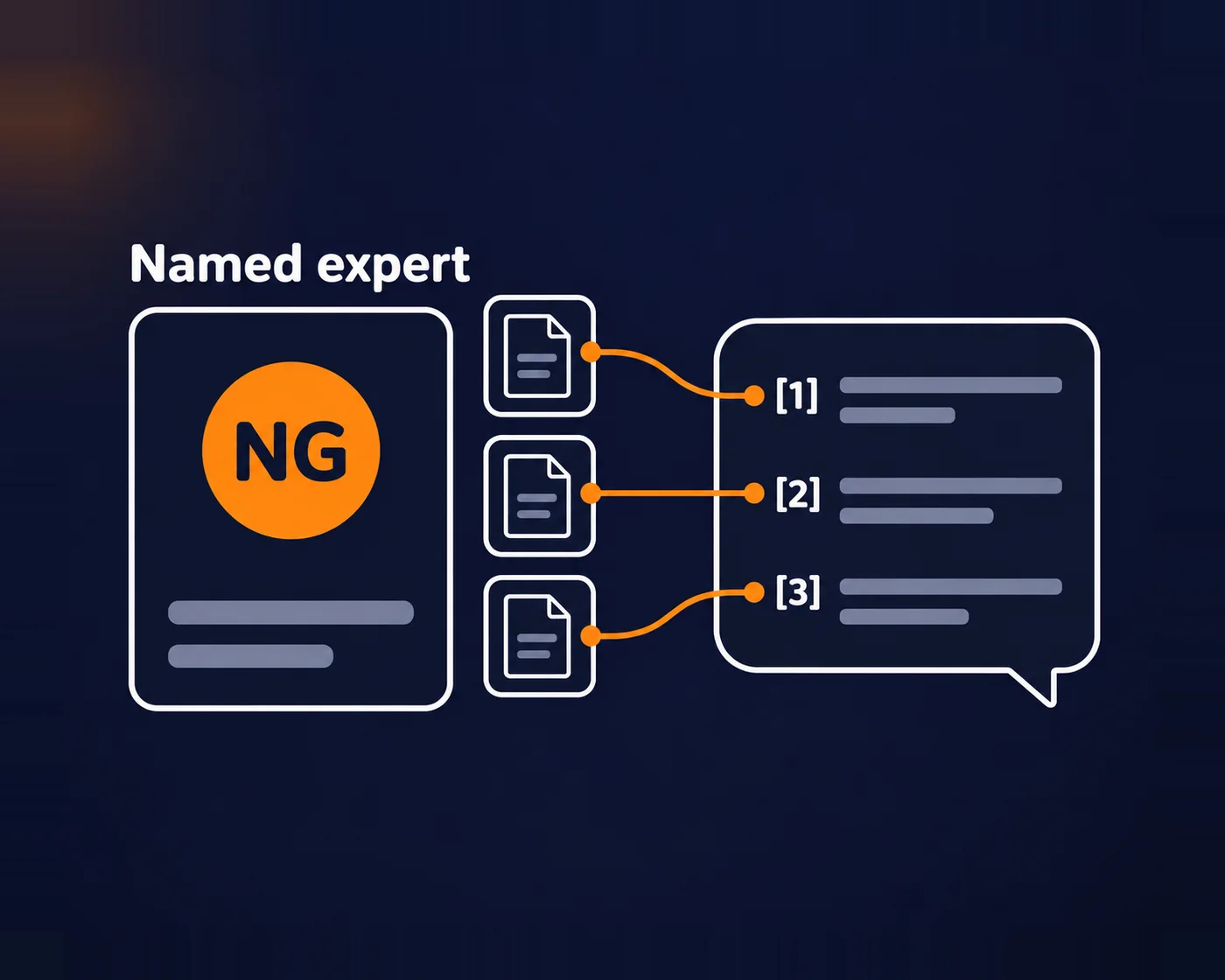
- People Names, roles and credentials in text, consistent with LinkedIn
- Services One page per service, specific outcomes
- Case evidence Client type, problem, approach, result as text
- Insights Dated articles with a named author
- Careers Open roles as text from your recruitment system
- Contact Contacts by service or office
Common failure
- People Headshots with job titles only
- Services One “what we do” page listing everything
- Case evidence Logos with no story
- Insights Last post from 2023
- Careers Typed twice, out of sync
- Contact One generic form
What an AI-ready professional services website looks like
Clear expert profiles, case evidence and dated insights give clients and search systems facts they can check. An agent-ready website can link each person’s credentials, sectors and approved articles to the relevant services. That does not guarantee an assistant will recommend the firm.
I would ask each expert to approve their role and credentials, each case owner to approve what can be published, and marketing to own the review dates. When a partner leaves or a credential changes, update the profile, service contacts and article context together. A convincing biography that nobody maintains becomes a trust problem.
Professional services websites my team has built
Firms whose websites my team has designed, built or looked after.

GMP Law
Read the case study
Redesigned and rebuilt, with online subscriptions
EV20 Consulting Group

Chronos Agency
“They helped us redesign our website and have introduced a number of features as part of that website, which have really made us reach the goals.”

“The brief is always discussed to make sure we are aligned on the best approach to meet our business goals.”

“Top notch redesign and implementation of our company website. Great to work with and smooth professional process.”

Rules that shape a professional services website
01
Professional advertising rules
Some professions restrict testimonials or comparative claims, and your professional body’s rules apply to your website. Law firms: my team at WP Creative has dedicated work for you.
02
Candidate data
Job applications contain personal information. Route them straight into your recruitment system, the single source of truth, not into website form emails.
03
People’s details
Get consent for staff photos and bios, and remove profiles promptly when people leave, so clients never find a partner who left two years ago.
04
Accessibility
WCAG 2.2 AA is the target my team designs to, and government clients ask for it. It covers every page, from people profiles to job applications.
When you don’t need a new website
If clients already say “we found you on your website”, you may only need current people pages and a faster way to publish insights. My team often fixes those inside an existing site. Rebuild when the structure can’t show your services and sectors separately, or when nobody can safely update it. More on website redesign.

Professional services website design FAQs
Can our careers page pull jobs from our recruitment system?
Where the recruitment system provides a supported embed or API, we can use it as the source for website listings. Agree what happens when a job closes, an update fails or the external application form is unavailable. Test that a closed role disappears and that candidates can still reach the recruitment team without sending their CV to a generic website inbox.
Can you finish a website another developer started?
Yes. My team has taken over abandoned builds before. We review what exists, tell you plainly what to keep and what to redo, then finish it.
We sell to businesses. Should I read your B2B page instead?
If you sell products or services through buying committees, ordering or ERP systems, B2B web design fits better. This page is for firms whose product is their people’s expertise.
Can partners and consultants publish their own articles?
Yes. Agree who submits drafts, who reviews technical claims and who can publish, then give each person the access their role needs. Author profiles should credit the actual expert, while marketing manages approval and review dates. An approval policy only works if publishing permissions support it.
Do you do marketing or SEO for professional services firms?
No. My team designs, builds and looks after the website. We don’t sell SEO or advertising; we’ll refer you to partners and work alongside them.
Running a professional services firm?
Book a free call. You’ll talk with me or my team about your clients, your people and what your website should prove first. After launch, care plans keep it current.