
Ecommerce website development, chosen on your next three years
Fewer shoppers click through from search now, so every visit you do get has to sell. Ahrefs found the top Google result had a 58% lower click-through rate when an AI Overview showed (300,000 mostly informational keywords, December 2025 desktop data).



















Why work with Nirmal Gyanwali on ecommerce website development?
Product searches weren’t the focus, so read it as the direction of travel, not a number for your store. Ecommerce website development used to be judged on launch day. It should be judged on what each visit earns, and on year two, when the app fees pile up, the checkout breaks on a Friday night and nobody owns the store.
I’m Nirmal Gyanwali, Founder and CEO of WP Creative. My position is plain: search sends fewer clicks, so each visit has to earn more, and it only does if the store converts it. I built PostCliq; WP Creative operates it. I built it because I kept seeing stores lose sales after the click, on pages nobody was measuring. I set the direction and the standards; my team at WP Creative builds and runs online stores for Australian retailers and B2B suppliers, WooCommerce first and Shopify where it suits the business better.

Should I build my store on WooCommerce or Shopify?
Pick the platform your store will still fit in three years, not the one that launches fastest. Both Shopify and WooCommerce can support retail, wholesale and large catalogues. The decision is which product rules and integrations fit the platform, who controls changes, and who maintains it. WooCommerce gives my team more control inside WordPress; Shopify bundles hosting and checkout but applies its plan, API and app boundaries.
WooCommerce (WordPress)
- Ownership Yours, on your hosting
- Running costs Hosting, paid extension licences, payment gateway fees and someone’s time for updates
- Content and search Strong: the store sits inside a full CMS
- B2B pricing, custom logic Built to fit
- Maintenance Needs someone to own updates and security
Shopify
- Ownership Hosted by Shopify
- Running costs Plan subscription, card or third-party transaction fees, paid apps and someone’s time for changes
- Content and search Good for products, thinner for content-led selling
- B2B pricing, custom logic Native B2B on Basic, Grow, Advanced and Plus, with limits below Plus
- Maintenance Platform handled by Shopify
Test two conditions before choosing. First, use representative products, variants, filters and bundles to check what the platform already supports, what needs an extension and who pays for it. Catalogue size alone cannot tell you that; Shopify has native search and bundle options, while WooCommerce extensions also have costs and limits. A B2B arm with trade logins, customer pricing and purchase orders is no longer a Plus-only job on Shopify: native B2B runs on Basic, Grow, Advanced and Plus. Below Plus you get up to three active B2B catalogues across your markets, and no company-specific catalogues, deposits or partial payments. If your trade pricing fits inside those limits, Shopify is a real option. If every account has its own price list and terms, WooCommerce or Shopify Plus is the honest answer.
Decide on three things: who edits the store every week, what it has to connect to, and what it costs to run in year three. More detail: when Shopify is the wrong choice and WooCommerce developer in Sydney.
What does an online store need to keep selling in year two?
A store keeps selling when someone owns it after launch. That means a checkout that doesn’t leak, integrations that don’t need re-keying, updates and security handled on a schedule, and no risky changes during peak season. Most stores I see in trouble were built well and then left alone.
Example: for a national retailer, my team froze all changes from Boxing Day well into January, the store’s busiest weeks.
01
Pages that sell
Category pages, filters and product pages built around how people buy, answering the questions buyers ask before they add to cart.
02
Checkout testing
Check guest and returning-customer orders, clear fees, address validation and the payment methods your customers use, including Apple Pay and Google Pay where supported.
03
Proper integrations
Xero, NetSuite, ERPs, stock feeds, Afterpay, Stripe and shipping tools, with a named source of truth, supported access and an owner for failed syncs or duplicate orders.
04
B2B ordering
For trade and wholesale buyers who order differently from retail: customer-specific pricing, purchase orders and account approval.
05
Clean migrations
Between WooCommerce, Shopify and Magento, with old product and category URLs mapped to relevant destinations, tested redirects, updated internal links and indexing checks to reduce search and bookmark disruption.
06
Ongoing ownership
Someone who owns updates, speed and security, and a change freeze over peak season, under a care plan.
Stores my team has built and runs
Online stores my team has built or looks after.

Crown Furniture
Read the case study
Tile Factory Outlet
Read the case study
The Optical Co
“I had a fantastic experience working with WP Creative on our WooCommerce integration project. … They took the time to understand our needs and delivered a result we were seeking. … Since launch, we’ve seen more traffic and positive feedback from clients.”

“Our online eCommerce service not only rivals our competitors but goes a step beyond, thanks to Nirmal and their team.”

“Nirmal, Saba and all the team, you really did deliver on your promise. Thank you for your excellent service, great support, ease of communication and most of all delivering an outstanding website!”

Why do online stores lose sales after the click?
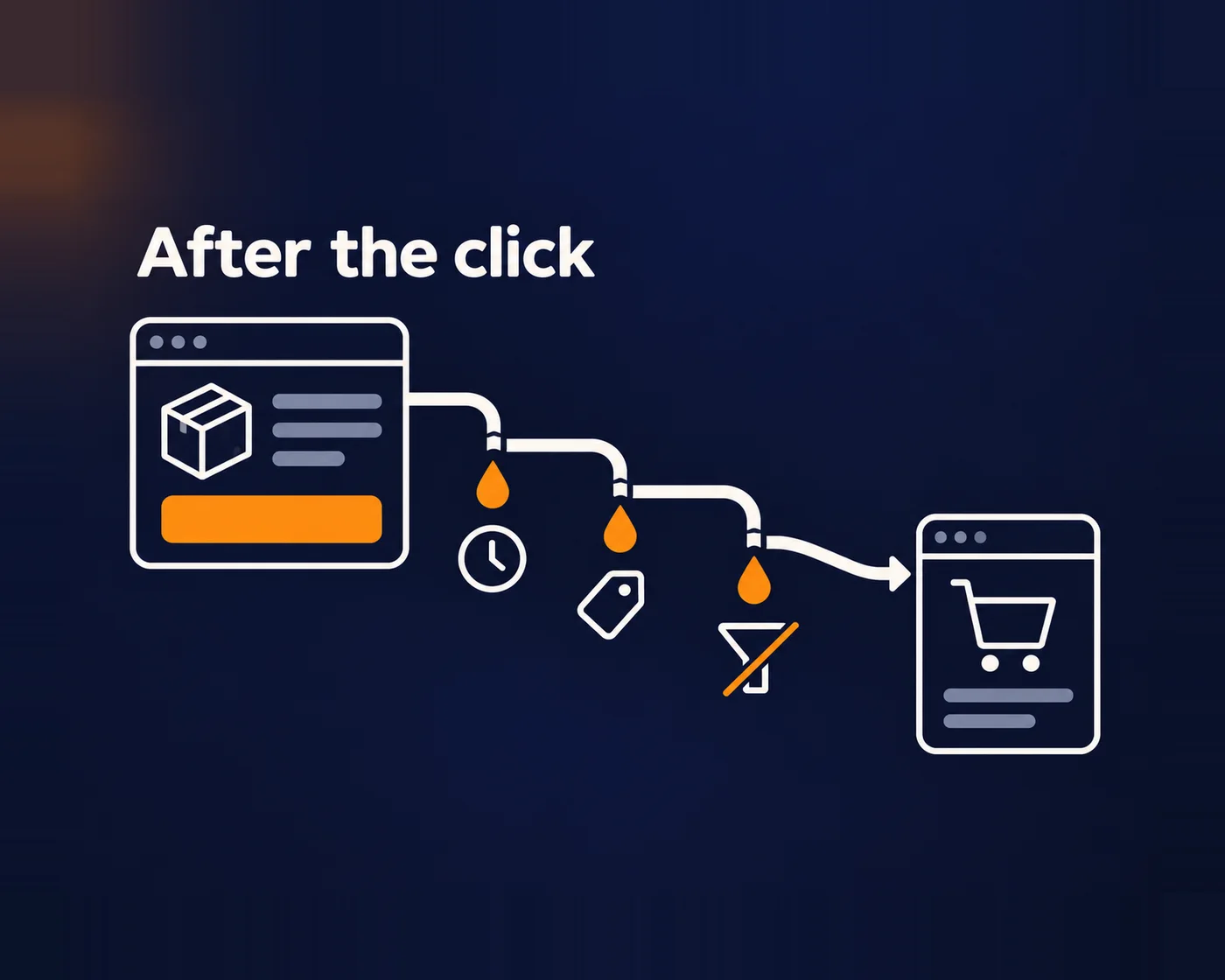
Because ads and search bring people to pages nobody measured. A slow product page on mobile, a surprise fee at checkout, a filter that hides half the range: each one leaks revenue quietly. The fix starts with knowing what a visit is worth after it lands, then ranking the leaks by the money they lose.
Post-click value is what a visit to your website is worth after the click: the enquiries, sales and revenue it produces, whether a person or an AI agent made the visit. I built PostCliq to find those leaks and rank the fixes by value; WP Creative operates it. It’s free to use, and it’s a good first look before you decide whether you need a rebuild.
Is it worth rebuilding a store that feels slow or fragile?
Usually not first. A slow or fragile store is more often a build, hosting or plugin problem than a platform problem, and fixing that costs far less than a rebuild. Fix what is fragile, measure for a few months, then decide. Rebuild when the store genuinely can’t do what the business needs.
Two examples from my team’s work. Tile Factory Outlet started with quick fixes in month one, not a redesign, and quote requests rose 75.1% in six months. WP Creative’s Gregory Jewellers case shows a mobile speed score up from 27 to 66 on the same platform, under a care plan, after plugin, theme, PHP and image work.

Do I need to get my store ready for AI agents?
Start with accurate product facts and a working checkout, then assess a specific shopping programme. OpenAI’s current merchant offering uses product feeds for discovery and sends customers to the merchant’s site or app by default. Google’s UCP-powered checkout includes eligible products in Australia, Canada and the United States for participating merchants with the required integration. Neither is a revenue forecast for your store.
Cloudflare’s test for an agent-ready site has four words: readable, discoverable, callable, payable (6 August 2026). For most stores, readable and discoverable are the work today: real product data, clean structure, accessible pages. Callable and payable depend on the specific programme, supported actions and payment approval. Before exposing an ordering tool, I would check how it handles a changed price, unavailable variant, stale stock and a repeated request. No shortcut makes an AI recommend your store.
AI crawlers are already a cost, though. Recently, bot and AI crawler traffic slowed a national retailer’s store and made its data feed downloads fail, until my team and the host traced and reduced it.

Ecommerce website development FAQs
My checkout is broken and I’m losing sales. What should happen first?
Treat it as a top-priority incident: diagnose on a copy of the site, fix, test a real order, then find out why it broke so it doesn’t happen again. If it’s happening now, book a call and say it’s urgent.
Should we connect the store to Xero, NetSuite or our ERP?
Yes, if people are re-keying orders or stock. Check whether an existing connector does most of the job before paying for custom code. My team has connected stores to Xero, NetSuite, payment gateways and stock systems.
Isn’t Shopify cheaper and more secure than WordPress?
Cheaper to start, not always cheaper to run. Compare like for like over three to five years. On Shopify, add the plan, card fees (or the extra transaction fee if you use another gateway), every paid app and the developer time for changes. On WooCommerce, add hosting, paid extension licences, gateway fees and the maintenance time someone must spend on updates and security. The cheaper platform is whichever total is lower for your catalogue and integrations, not whichever subscription is. On security, Shopify handles the platform for you, which is a real benefit. WooCommerce needs maintained code and hosting, restricted access, tested backups and monitoring. Maintenance reduces risk; neither platform removes the merchant’s responsibilities or guarantees that an incident cannot happen.
Should we move from WooCommerce to Shopify, and will it hurt our rankings?
Find out why you want to move first: my answer is on the Shopify developer page. Redirects are one part of search preservation. Content changes, crawl access, canonicals, internal links and the new site’s performance also need checking, and temporary ranking changes can happen. The broader launch process is covered in website redesign.
Does my ecommerce developer need to be in my city?
No. What matters is that they own the result and answer when the checkout breaks. My team is in Sydney and Kathmandu and builds for retailers across Australia. If you’re in Sydney, see ecommerce website design in Sydney.
Selling online, or about to?
Start with the business case: what the store must earn per visit, and what it costs to run in year three. My decision guide, building an online store, walks through it. Then book a free call. You’ll talk with me or my team, and you’ll get a straight answer on platform, scope and what to fix first.