
White label web design from a partner who won’t compete
A web partnership can put two things at risk: being made to look bad in front of a client, or quietly losing that client to the partner.



















Why work with Nirmal Gyanwali on white label web design?
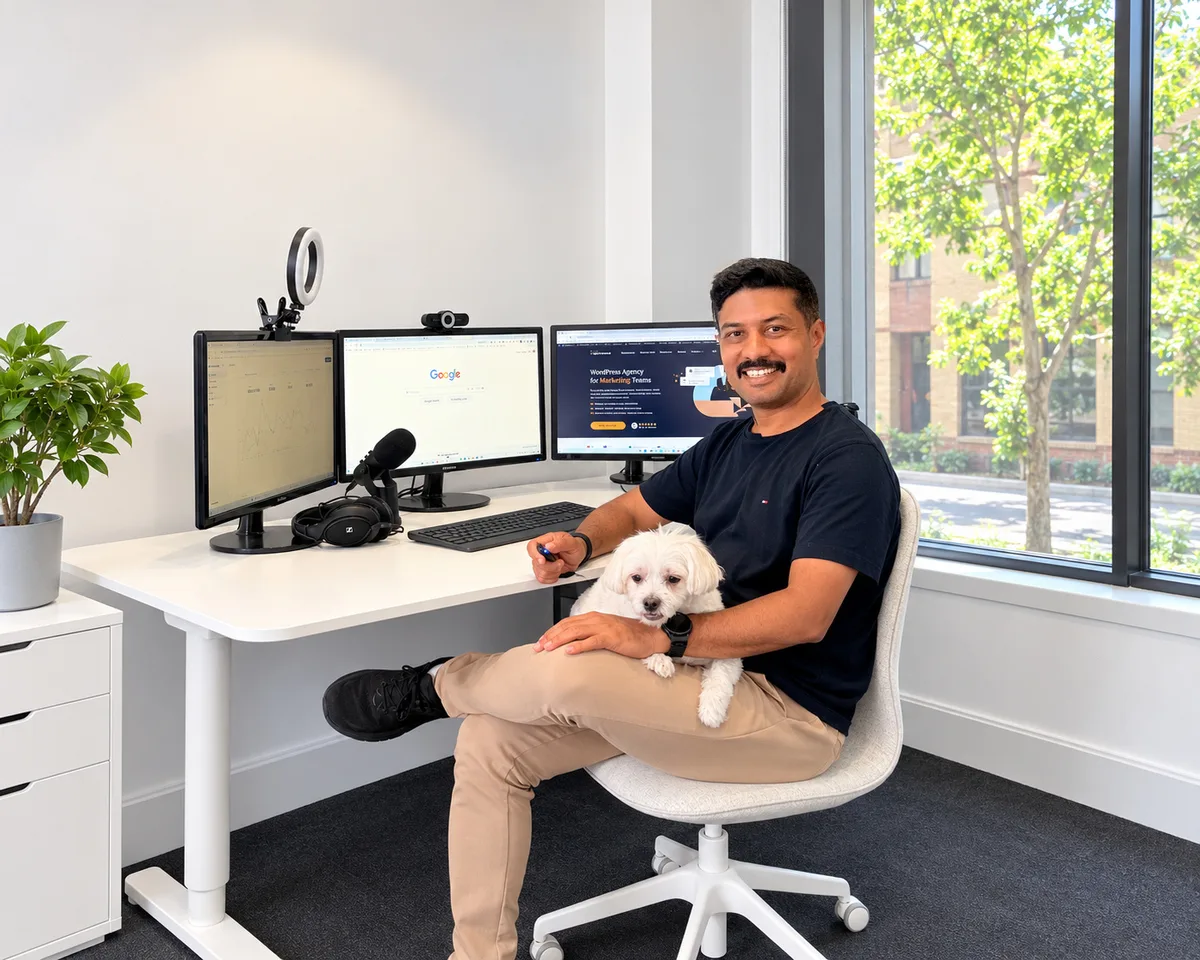
I understand both. I’ve run WP Creative since 2016, and plenty of our work has come through agencies who needed the website done properly and needed to trust who was doing it.
I’m Nirmal Gyanwali, founder and CEO of WP Creative, and I built PostCliq. My team builds, rebuilds and looks after websites for SEO, paid media, creative, PR and branding agencies, under your brand or alongside you. We don’t sell SEO services, ads or marketing strategy, so we aren’t pitching for your work.
Why do agencies use a white label web partner?
Agencies use a white label web partner when clients need a website built, fixed or looked after, and keeping a development team in-house doesn’t pay. The right partner builds to your design and standards, under your brand, on your timeline, and supports the site after launch, so your strategy work lands on a website that performs.
Your clients now want three things from their website, and you need a partner who can deliver all three:
- Be found in Google and in AI answers, which starts with a fast, well-structured, agent-ready website.
- Be chosen when the traffic you’ve earned them arrives: clear pages, working forms, conversion paths that hold up.
- Grown: updated, secure, monitored and improved every month, with a named response and escalation route if a fault occurs.
What agencies tell me goes wrong with web partners
The pattern behind most of these is an arrangement, not a person. A small branding studio once brought me in to take over a client website from a developer it had engaged for that one project, who had made too many mistakes. Its client was waiting, and the timeline was tight. We took the project over, worked through every issue with them and delivered a clean build on time. I was a freelancer myself once, so this isn’t about freelancers. It’s about work where nobody is committed past the invoice.
01
The design comes back different
The build quietly simplifies what the client approved.
02
The developer disappears
Someone engaged for one job is unavailable the week before launch.
03
Rankings drop after launch
Redirects missed, and the agency’s SEO results take the blame.
04
The partner pitches your client
Directly, or by sliding their own services into the conversation.
05
Nobody owns it after launch
The site breaks months later and your account manager fields the call.
06
Clients ask about AI
“Are we visible in ChatGPT?” and the web side can’t answer.
Three ways to work together
White label
- Who the client sees Your agency only
- Who owns the relationship You
- Branding on deliverables Yours
- Best for Agencies selling websites as their own service
- After launch Care under your brand
Co-delivery
- Who the client sees Your agency, with my team introduced as your web partner
- Who owns the relationship You
- Branding on deliverables Yours, with our people named
- Best for Complex builds where your client wants to meet the developers
- After launch Care with your team copied in
Referral
- Who the client sees My team, with you kept in the loop
- Who owns the relationship You keep strategy; my team owns the website
- Branding on deliverables WP Creative’s
- Best for Agencies that don’t want to manage web projects
- After launch Care plan direct with the client
Before kickoff, record who owns custom work, client accounts and data, which third-party licences remain supplier-held, who can approve releases, and who receives an urgent alert. The client relationship and ownership of website assets are separate questions; both need an exit and handover plan.
What my team has built for agencies
A design studio
The back end of many websites the studio designed, including designs that were “a bit out of the ordinary”, built as drawn.
A web strategy agency
Schema templates for home, service, location, blog and case study pages before launch, and redirect faults repaired at the source rather than adding another chain.
A creative studio
Moved off a hacked shared host onto managed hosting, from a legacy CMS to WordPress, with a content freeze plan for its team and planned UX work after launch.
“You have all been amazing over these last few months and delivered above and beyond for all of our clients. You have made our clients happy and made our job easier.”
Clare Rainbow, Step Change
The AI question your clients are asking
Your clients are asking whether ChatGPT and Google’s AI answers mention them. Part of the work is technical: whether AI crawlers can reach the site, whether the intended tool can read the fetched or rendered content, and whether visible facts are accurate and consistent. That is website work, and it’s what my team does. Your agency keeps the strategy, the content and the client. More on what that work involves on my AI-ready website page.

When a white label partner isn’t the answer
If you only need a website every few months and your clients are happy with templates, a freelancer you trust may suit you better and cost less. A partner like my team makes sense when websites are a regular part of your service, when builds are custom or integrated, or when your clients need ongoing care with a response time.
White label web design FAQs
Will you ever contact our clients directly?
Not without your agreement. In a white label arrangement your client hears from us only when you ask. Put it in the partner agreement before the first project: non-solicitation, who speaks to the client, who owns the work, and what happens to the site and the care if either of us ends the arrangement.
Can you build exactly what our designers designed?
Yes. My team builds from your Figma or design files and flags anything that won’t work on a phone or for accessibility before building it, not after.
Who looks after the website after launch?
Whoever you choose. My team can provide care under your brand, alongside your team, or directly with the client.
Do you compete with SEO or marketing agencies?
No. We don’t sell SEO services, ads, content or strategy. Technical work on the website itself, such as speed, structure and redirects, is part of the build, and we agree with you up front where that line sits for each client.
Can you move a client’s site without losing their rankings?
We can protect them, though nobody can honestly promise zero movement. Every URL is mapped, redirects are tested on staging before launch and checked again after it, and Search Console is watched for the weeks that follow, so anything that slips is caught early. See website migration.
Running an agency?
Book a free partner call. You’ll talk with me or my team about your clients, your process and which way of working fits. I also host WPC Connect, a regular gathering of agency founders and marketing leaders in Sydney and Melbourne. WP Creative’s partner program has the formal details.