
For three years AI mostly talked. You typed a question, it typed an answer, and you did the work. Since August 2026 that has changed. Four of the biggest AI companies launched personal AI agents, and a startup most people had never heard of was valued at US$10 billion. These agents do the work themselves: they research, compare, book, buy and follow up while you get on with your day. I think this is the next big consumer technology industry, and it changes who visits your website.
The short answer
- A personal AI agent is software that acts for you, not just answers you. It works in the background on goals you set and comes back when it needs a decision.
- Five launched or opened up between August and October 2026: Grok Bot, Meta’s Muse, OpenAI’s dots, Instinct and Anthropic’s Claude Duet.
- The money is real. Instinct, an agent you simply text or call, raised US$1 billion at a US$10 billion valuation on 28 September 2026, about a month after raising US$250 million at US$2.5 billion.
- Buying on its own is still the exception. Visa’s 2026 shopping index reports that 56% of consumers already use agents to search and compare, while only about a third say they would let one pay. Visa’s page doesn’t publish the consumer sample behind those figures.
- For a business, the visitor changes first. These agents do their research on websites. A site an agent can read and trust gives it a reason to recommend you.
What is a personal AI agent?
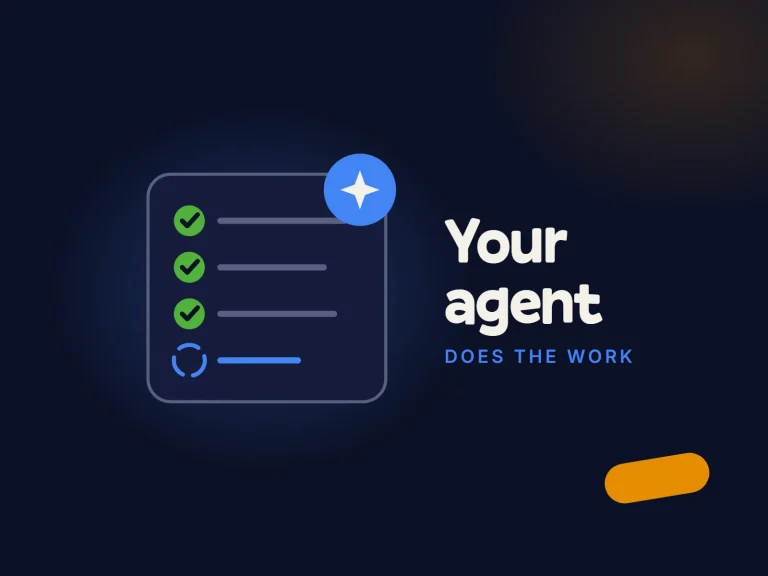
A personal AI agent is an AI assistant that takes actions for one person: it researches, fills in forms, books, buys and follows up, using that person’s accounts and preferences. A chatbot answers when you ask. An agent keeps working after you stop typing, and asks you only when a decision needs you.
The difference sounds small. It isn’t. A chatbot saves you reading. An agent saves you doing. Ask a chatbot for the best flights to Melbourne and you get a list. Ask an agent and you get a booking, a calendar invite and a message to the person you’re meeting.
That’s also why I think it’s an industry and not a feature. Answers were always free on the internet. Time isn’t. The people who feel this first are the ones with the most admin and the least time: founders, CEOs and small business owners. Then everyone else, the way smartphones went from executives to everybody.
Who launched personal AI agents in 2026?
Between August and October 2026, Grok Bot, Meta’s Muse, OpenAI’s dots and Anthropic’s Claude Duet launched or opened previews. Instinct announced another US$1 billion in funding. These products can work through computers and connected apps in the background, but their access, limits and approval rules differ.
| Agent | Company | Launched | How you reach it | Status in October 2026 |
|---|---|---|---|---|
| Grok Bot | Official site branded SpaceXSI, formerly xAI | 11 August 2026 | Desktop and iOS apps | Beta on eligible SuperGrok and Cursor individual or team plans; Enterprise waitlist |
| Muse | Meta | 8 September 2026 | Muse app, the web, WhatsApp | Live, US only; free and paid tiers |
| dots | OpenAI | 29 September 2026 | ChatGPT, Codex, Slack, Teams | Live for Pro and Business Premium in some markets |
| Instinct | Spear Street Technology | Private beta from February 2026 | Text, call or WhatsApp | Invite only; valued at US$10 billion |
| Claude Duet | Anthropic | 21 October 2026 | Its own app on iOS, Android and claude.ai | Research preview, waitlist, US Pro and Max plans |
The detail behind each one:
- Grok Bot. Elon Musk’s AI company calls it “your team of always-on agents”. Each bot signs into your apps and websites, including ones without an API, and can learn a workflow by watching you do it. SpaceX announced it was acquiring xAI in February 2026.
- Muse. Meta’s agent sends emails, books travel, fills in forms and buys things with one-time cards. A second agent, which Meta calls Sentinel, has to approve anything Muse sends out to the internet.
- dots. OpenAI launched dots on 29 September 2026: always-on agents with a cloud computer and connections to more than 4,000 apps. You can talk to a dot inside ChatGPT. Text messaging is a limited beta for some US Pro users, separate from in-app voice and workspace messaging.
- Instinct. Instinct’s own site puts it simply: “You can text or call it.” I use it myself, over WhatsApp, and that’s the point: there’s no new app to learn, I message it the way I’d message a person. It has its own phone number, connects to your email and accounts, and books, pays bills and cancels subscriptions. The company hasn’t published revenue or user numbers.
- Claude Duet. Anthropic’s preview can prepare a morning brief from connected apps and work on its own cloud computer. It checks accounts at set intervals. More on its limits below.
Why is this the next big industry?
Because it sells time, not answers, and the buyers are already showing up. Investors valued one agent startup at US$10 billion within months of launch, the largest AI companies all shipped agents in the same quarter, and shoppers already use agents to research and compare. The missing piece is trust to let them pay.
The numbers that convince me:
- The investment is substantial. Instinct announced US$1 billion in Series C funding at a US$10 billion valuation on 28 September 2026. It was still in early access. Funding is evidence of investor conviction, not proof that an agent reliably finishes every job.
- Agent traffic is measurable. Cloudflare reported on 30 September 2026 that daily requests from AI agents on its network grew by more than 1,700% in a year. That is a network observation, not a count of buyers or a census of the whole Internet.
- Some AI referrals convert well. Adobe’s July 2026 US retail analysis found AI-referred visits converted at a 60% higher rate than non-AI visits. It is an observed channel difference in US retail, not a controlled test or a forecast for an Australian service business.
The first wave of AI was a better search box. This wave is a better assistant. Executives have always paid for assistants because an hour of their time is worth more than an hour of someone else’s. Agents make that maths available to everyone with a phone. That’s a bigger market than search.
Why is Anthropic releasing Claude Duet?
Anthropic positions Claude Duet for professionals and small business owners. Its help documentation says it is designed to show you a proposed message, payment, signature or deletion and wait for approval. That is a product safeguard, not a guarantee that the system cannot make a mistake.
That’s what Anthropic said on 21 October 2026, and I’ll keep to it. Three more details from its announcement and help pages are worth noticing:
- It’s honest about its limits. Anthropic says Duet may misread a thread or misjudge what’s urgent, and that personal errands like booking tickets are weaker because it was built around work.
- It checks at set intervals. Background work counts against your plan limits. The help page explains the trade-off between keeping up with your accounts and using that allowance.
- It can’t trade securities or move money between accounts, and it’s a separate app for now so early feedback can shape how it works with the main Claude app.
Some of the press framed Duet as Anthropic’s answer to Muse and dots. Anthropic didn’t say that. My read, and it’s only mine: Anthropic is starting where its users already are, which is work. The tools earn trust on real work first, then move into the rest of your day. A professional or small business owner has the most inbox, calendar and admin, and the clearest cost of an hour lost. Start there, prove the approval step works, then go after the errands.
Whoever wins, the pattern across all five is the same. They run on a computer of their own, they connect to your accounts, and the ones that have explained how they handle money put a check in front of it. The race isn’t for the smartest agent. It’s for the one you trust with your card.
Where does the evidence push back?
Agents research far more than they buy. The first attempts at letting AI complete purchases were scaled back in 2026, most agents are in beta, preview or US-only, and none of the five has published how many people use it every day. The direction is clear. The timing isn’t.
I want to be straight about this, because a lot of agent hype skips it:
- In-chat buying stalled once already. In March 2026 OpenAI said the first version of Instant Checkout in ChatGPT “did not offer the level of flexibility” it wanted. It let merchants use their own checkouts and refocused on helping people discover products.
- Trust lags behind curiosity. In Visa’s index, 56% use agents to compare, but only about a third would let an agent handle the payment. And only 15% of merchants had product catalogues an agent could even find, in a March 2026 survey of 1,185 merchants in the US, Brazil and the UAE.
- Privacy is the open wound. In August 2026 TechCrunch reported that Instinct’s terms gave it a “perpetual and irrevocable” licence over user material. An agent that can do everything for you can also see everything about you.
- AI still sends very little traffic. Across 115,254 sites, Ahrefs measured AI assistants at 0.43% of website visits in September 2026, against almost 24% from Google.
None of this changes my view. It changes the order. Agents will do the research for most people first, then the routine purchases, then the big ones. The businesses that wait for the last step to arrive will miss the first two.
What does this mean for your website?
My prediction: in many categories, agents will visit your website more often than people do. An agent researching a supplier reads your pages, checks your prices, opening hours and policies, and decides whether to shortlist you, often without a person ever seeing the page. If it can’t read your site, it has less reason to recommend you, and a competitor it can read becomes the easier pick.
Grok Bot’s launch post says its bots sign into “apps and websites”, including ones without an API. That’s the tell. For most businesses, the website is still the only door an agent can walk through. It needs to be a door software can open: clear facts in the text, a booking or enquiry path that works without guessing, and nothing important hidden in an image or a pop-up. I call that an agent-ready website, and it’s the practical side of the agentic web: the stage of the internet in which AI agents, not just people, find, read, compare and act on websites on someone’s behalf.
I build and test agents every day, across WP Creative’s WPO platform, internal tools, wpcreative.com.au and client work. The useful lesson is about the door you give the agent: a short list of named tools, limited access and a person reviewing the result before release. Check the account as well as the tools, because a narrow interface does not remove permissions available through another route. Most of this work is internal and signed in. A buyer’s shopping agent finding a business and sending an enquiry is a separate task to test.
What to do next
- Ask an agent about your business. Ask ChatGPT, Claude or Gemini to find and compare providers like you in your city. Note who it picks and what it says about you.
- Put the facts an agent needs in plain text: what you do, where, for whom, prices or price ranges where you can, hours, policies and how to book.
- Test your enquiry path without a mouse. If a form only works with a fancy widget, an agent will struggle with it, and so will someone using a screen reader.
- Check you’re not blocking AI agents by accident in your firewall or robots rules, then decide deliberately what to allow.
- Measure agent visits. Your server or CDN logs show user agents such as ChatGPT-User and Claude-User. Start counting now, while the numbers are small.
If you want the longer version of why the site still matters when agents do the shopping, I’ve written about why your website matters more than ever in the AI era, and about where this all ends up in 2027 and beyond, when the future goes screen-less. If you’d rather have my team check your site for you, this is how we build an AI-ready website.
Frequently asked questions
Is a personal AI agent the same as a chatbot?
No. A chatbot answers questions when you ask. A personal AI agent takes actions for you, such as booking, buying, filling in forms and following up, and keeps working in the background. Most agents still ask for your approval before anything consequential, like paying or sending a message.
Can I use these agents in Australia?
Availability is mixed. As of 26 October 2026, Muse and Claude Duet are US-only previews or rollouts. Dots is available to eligible paid ChatGPT accounts, including eligible Australian accounts, with plan and workspace restrictions. Grok Bot is in beta on eligible paid plans. Instinct remains in early access, and I use it over WhatsApp. Check each product’s current eligibility before planning around it.
Are personal AI agents safe to use?
They have safeguards and limits, and they can still make mistakes. Duet is designed to ask for approval before consequential actions. Start with a low-risk task, give access only to what it needs and review its output. A product’s approval screen is not a substitute for checking what you are approving.
Will AI agents replace websites?
No. Agents need websites to do their research. They read your pages to check facts, compare options and book. What changes is who visits: more software, fewer people. A site agents can read accurately gives them a reason to recommend you; one they can’t is easier to skip.
How much did Instinct raise?
Instinct announced US$1 billion in Series C funding at a US$10 billion valuation on 28 September 2026, from Sequoia, Benchmark and Coatue. Those are the figures in the company’s announcement. A valuation describes the financing, not product reliability.