
Web design Hobart for Tasmanian businesses with customers elsewhere
Web design in Hobart often starts with an awkward truth: for tourism, food and export businesses, an important audience can be outside Tasmania.



















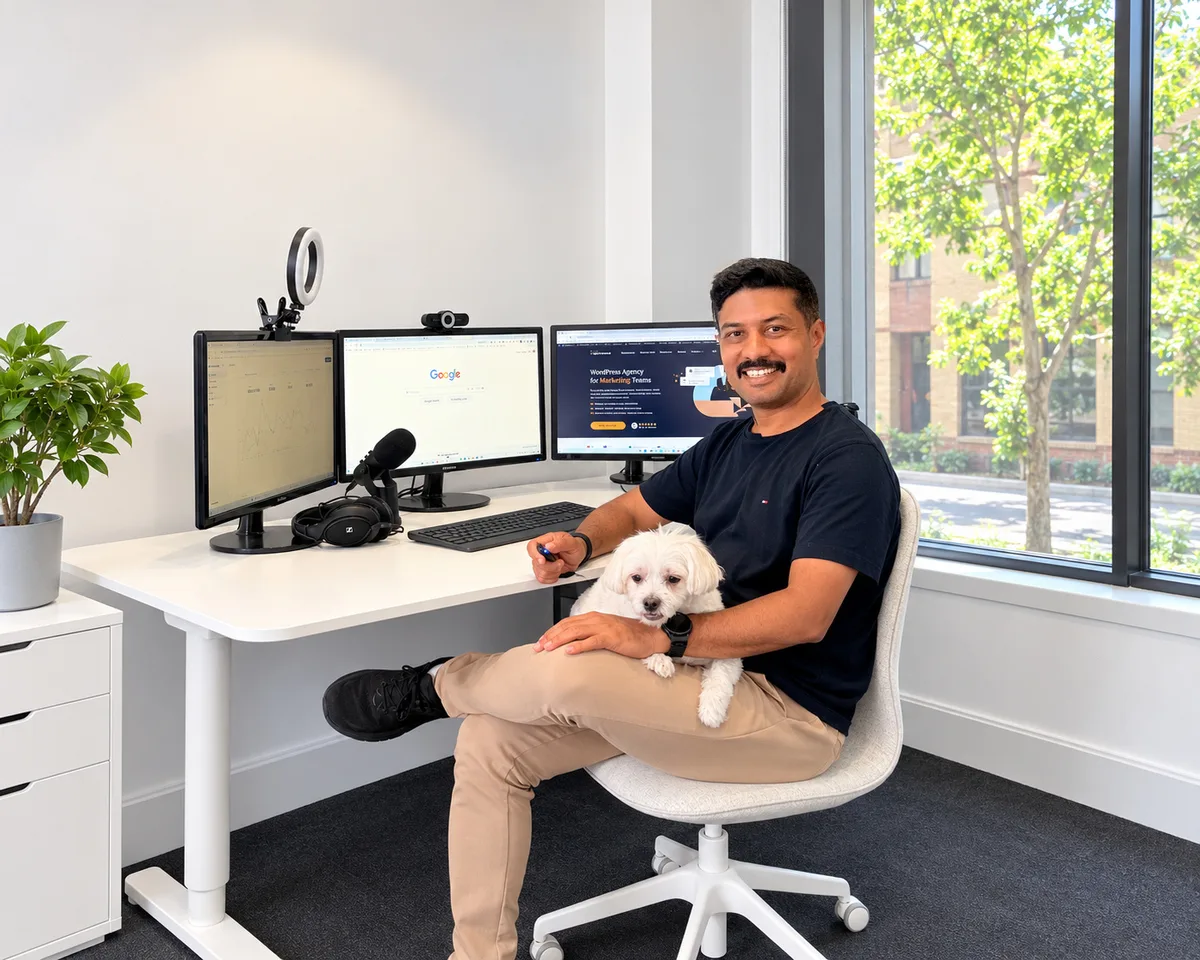
Meet Nirmal Gyanwali, web designer for Hobart businesses
The visitor booking a table at Salamanca is in Melbourne. The restaurant buying your whisky or salmon is in Sydney or Singapore. The researcher considering a role at the Antarctic Division is in Europe. Your website meets all of them before they ever cross Bass Strait.
I’m Nirmal Gyanwali, founder of WP Creative. I’ve designed and built websites since 2005, and my team builds WordPress websites for hospitality, food, tourism and not-for-profit organisations across Australia.
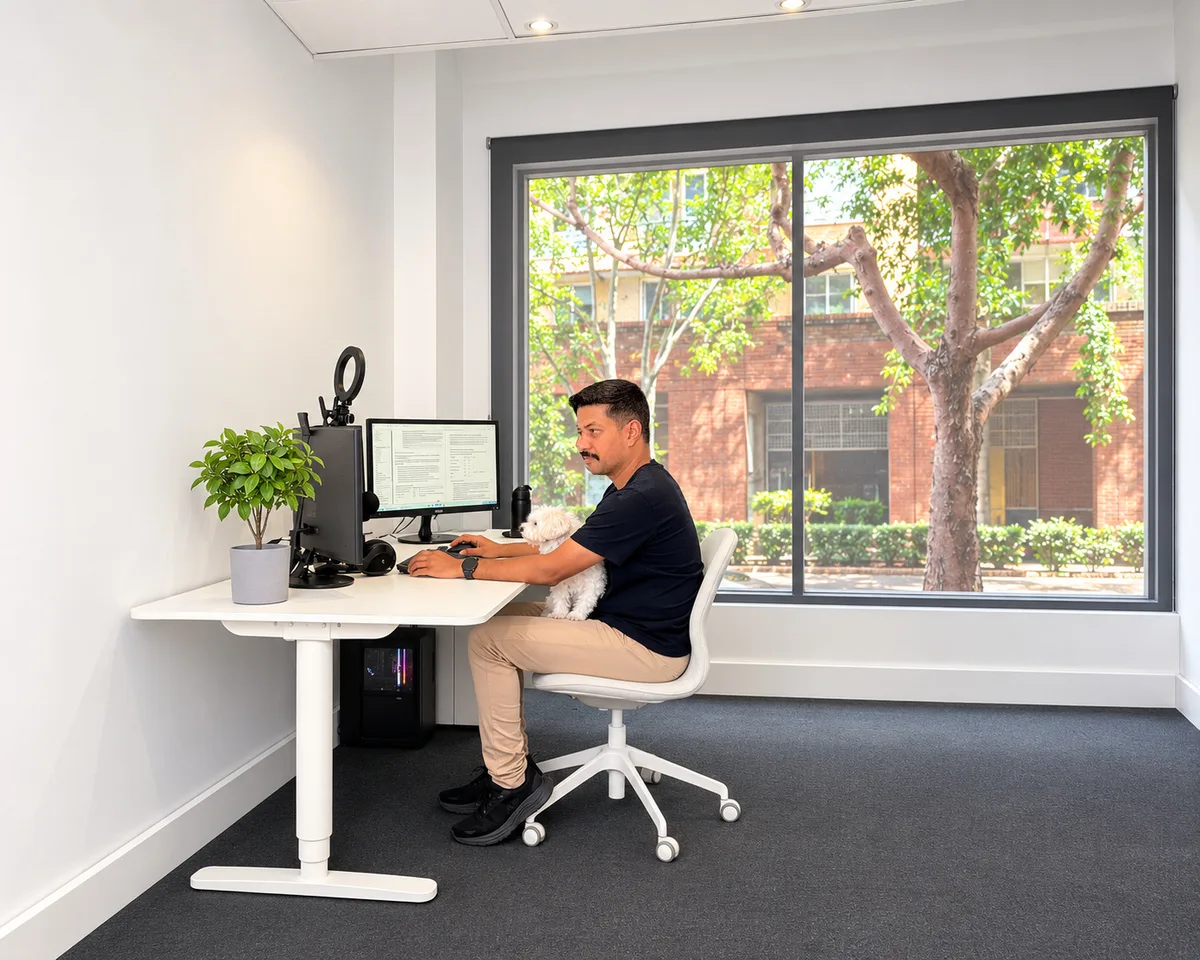
Here’s where we stand: my team works from Sydney and Kathmandu. We work with Hobart organisations by video; on-site visits can be arranged for larger projects. There’s no Hobart office, and I won’t suggest there is.
Who is a Hobart website really for?
Often three audiences, and only one of them lives in Hobart: visitors planning a trip, mainland and overseas buyers of Tasmanian products, and local customers. Plenty of sites are written for the third and lose the first two. If your customers are mostly local, that’s the right call. Let your brief decide the weighting, then put the paying audience’s questions first.
01
Visitors planning a trip
They’re on a phone in another city, comparing three options. Availability, prices, location and booking need to be one tap away.
02
Mainland and overseas buyers
Restaurants, retailers and distributors want provenance, specifications, freight and a trade enquiry route, not just a pretty story.
03
Local customers
They know you already. They want opening hours, what’s on and a quick way to book or buy.
What do Tasmanian tourism, food and drink businesses need from a website?
The same six things come up again and again. None of them is about the colour palette.
Bidfood taught me that a trade buyer’s path only works if someone owns it. It’s one of Australia’s largest foodservice distributors, and its site connects chefs and procurement managers with their local branch. Years of campaigns and plugins had piled up, nobody owned the fixes, and the site averaged position 41 in search. My team didn’t rebuild it: we cleared the redirect chains, error pages and missing metadata in a set order, then kept them clear. Reported aggregate search click-through rose from 3.6% to 6.8% (Google Search Console, July 2025 against July 2026). Read the Bidfood case study.
01
Booking on a phone
Tours, tables and rooms booked in one go on a small screen, with live availability and confirmation the visitor trusts.
02
Seasonal content
Summer crowds and winter festivals need different pages. Plan the content calendar so the site changes with the season, not a year late.
03
Trade and export pages
Distributors want specifications, certifications, minimum orders and a named contact. Give them a path that skips the consumer story.
04
Freight that adds up
Shipping across Bass Strait shapes your checkout. Show delivery costs and times clearly before the customer reaches the final step.
05
Provenance, told plainly
Where it’s grown, made or caught, by whom, and why it’s different. Specific facts beat adjectives for both buyers and AI answers.
06
Reviews and press
Visitors trust other visitors. Bring reviews, awards and media mentions onto the pages where people decide.
The other Hobart: science, government and not-for-profits
Hobart isn’t only tourism. It’s the gateway to Antarctica and the Southern Ocean, with the Australian Antarctic Division at Kingston, CSIRO’s marine laboratories and the University of Tasmania’s marine and Antarctic research. State government and a strong community sector are part of the city too.
These organisations need different things from a website:
- Accessibility built in. Public and community organisations answer to boards and the public, so WCAG accessibility belongs in the templates, not in a later fix.
- Content a small team can run. Many Hobart organisations have one communications person. The editing has to be simple enough for them to own.
- Clear answers for people and machines. Research groups and agencies are increasingly found through AI summaries. Plain facts and good structure make them easier to cite correctly.
What has my team done that’s relevant to Hobart?
I’ll be plain: my team doesn’t yet have a Tasmanian client I can show you. What we do have is work in the sectors Hobart runs on.

Should a Hobart business hire a Tasmanian web designer?
Sometimes, and I’ll say when. Hobart has capable local studios, and for a small site with regular in-person shoots one may be the right fit. Tasmanian Government agencies also apply an economic and social benefits test to larger purchases under the state’s Buy Local Policy, which can favour a Tasmanian supplier on a larger government website. A mainland team earns its place when the site sells beyond Tasmania and needs a full team behind it.
Time isn’t a barrier. Hobart and Sydney share a time zone and both run daylight saving, so a call at 10am is 10am for both of us.
A Tasmanian studio fits when: you want to meet in person often, the scope is small, your customers are mostly local, or local procurement rules weigh in.
A mainland team fits when: you need designers, developers, QA and a project manager on one team, integrations with booking, payment or stock systems, and care after launch that doesn’t depend on one person.
How will people find a Hobart business in AI answers?
Start with facts a prospective customer can check: seasonal availability, the booking operator, delivery limits, opening hours and what happens if a third-party booking service is unavailable. An AI Overview observed for a web-design query does not establish how all Tasmanian travellers research or which businesses assistants will cite.
So write the facts an assistant can lift: what you offer, where, when you’re open, what it costs to book, how to get there. Keep them consistent across your site, Google Business Profile and listings. Earn reviews and press. Nobody can promise you’ll be cited. You can make it easy, and measure it over time.
How much does web design in Hobart cost?
It depends on scope, not the island. A five-page site, a tour operator with live booking and an online store shipping to the mainland are three different jobs. Write one brief, get every quote against it, and check what’s included: content, migration, testing and care after launch.
I don’t publish service prices on this page. My website design cost guide explains what drives the number and how to compare quotes that seem miles apart.

Why work with Nirmal Gyanwali on web design in Hobart?
Because your website gets treated as an asset that has to earn, and a team stays with it after launch. I founded WP Creative in 2016 on an $18,000 loan, after years as a designer and developer. The team is now 40+ people across Sydney and Kathmandu, and has served 1,200+ businesses.
For a Hobart organisation, that means:
My team uses AI across every project, with Claude Code working inside real guardrails, and we put the technical architecture first and check that the important page types can be accessed and read by the intended search and AI tools. Your marketing team keeps the strategy; we handle the architecture, design, build and delivery.
- Hospitality and food experience. Hotel, foodservice and experiences work, where booking and enquiries are the business.
- WordPress built lean. Reusable blocks your team can use, and as few plugins as the job needs. See WordPress web design.
- Your accounts in your name. Domain, hosting and analytics stay yours, with no lock-in.
Web design Hobart FAQs
Do you have a Hobart office?
No. My team works from Sydney and Kathmandu and works with Tasmanian organisations by video; on-site visits can be arranged for larger projects. Hobart and Sydney share a time zone and daylight saving, so meetings fit both working days with no juggling.
Do you work with businesses outside Hobart, in Launceston or regional Tasmania?
Yes, the same way: video calls, shared prototypes and a project tool you can see into. A cellar door in the Coal River Valley and a Launceston manufacturer need very different websites, so we start with who the site must convince, not where the business sits.
Can you build a booking website for a Hobart tourism operator?
Yes. My team builds WordPress sites that connect to booking engines and payment systems. The priorities are mobile booking that finishes in one go, availability that stays current, and pages that answer a visitor’s questions about getting there, weather and what to bring.
Before sign-off, agree how sold-out dates, cancelled departures and booking-engine failures appear to the visitor, and who updates each system. Test those states with safe test data rather than making a real charge.
Can you build an online store that ships from Tasmania to the mainland?
Yes. My team builds WooCommerce stores, including wholesale pricing and trade accounts. Plan freight early: Bass Strait shipping, perishables and delivery times shape the checkout more than the design. Show delivery costs before the last step: in Baymard Institute’s checkout research, extra costs such as shipping are the most common reason shoppers give for abandoning a checkout.
Will a new website hurt our Google rankings in Hobart?
It can, if the move isn’t planned. Every old URL needs an agreed outcome: retain it, redirect to a relevant replacement, or retire it with 404/410, pages that rank protected, and rankings checked after launch. Small Hobart businesses often rank on a handful of pages, which makes each one worth protecting. See website redesign.
Is WordPress the right platform for a small Hobart business?
Usually, if you publish content and want enquiries or bookings, and someone will look after it. It’s the wrong choice if nobody will update it, or if a simple booking platform’s own site does the job. The platform matters less than who edits it and what it must earn.
Who looks after the website after launch?
My team does, on a care plan, if you want: updates, security, backups, monitoring and improvements. Or take it elsewhere at any time, because the accounts are in your name. More on web development and care, and on how my team works in Sydney.
Planning a Hobart website?
Book a free call. You’ll talk with me or my team about who your website has to win over, from Salamanca to Singapore, and get a straight answer on whether it needs a fix, a redesign or a rebuild.