

The best e-commerce platform is the one that fits how your business sells, ships and connects to its back office, not the one with the longest feature list. In 2026 the real choice for most Australian stores is between a hosted platform you rent (Shopify, BigCommerce, Squarespace, Wix) and open-source software you host and maintain (WooCommerce, Magento Open Source, PrestaShop, OpenCart). The table below compares them as they stand today. If you are still deciding whether you need an e-commerce site at all, start there.
I first wrote this list in 2015. Since then 3dCart has become Shift4Shop, Magento has become part of Adobe, and the question store owners bring to my team has changed. It is rarely “which platform has more features?” More often it is “why do our orders keep getting stuck?” Recently a specialist consumer goods brand came to us with a store whose connection to its inventory and accounting system kept failing, and the failures were delaying order fulfilment. The platform looked fine on paper. The real problem was a fragile connection between the shop and the back office. My team’s first job was a stabilisation sprint to find where the sync broke, before anyone talked about design. My lesson: choose a platform for how it connects to stock, accounting and fulfilment first, and for the storefront second.
Which e-commerce platform should you choose in 2026?
Choose a hosted platform when its checkout, catalogue, integrations and operating model fit your store. Choose self-hosted software when the control it gives is worth the maintenance your team will own. Hosted platforms also support complex and B2B stores; compare the actual feature and plan limits rather than assuming hosted means simple.
| Platform | Type | What you pay for | Best fit | Watch out for |
|---|---|---|---|---|
| Shopify | Hosted (you rent it) | Monthly plan and apps. In Australia, a 3-day free trial, then A$1 a month for three months on most plans. Third-party transaction fees may apply if you don’t use Shopify Payments. | Standard retail flows, small teams, low maintenance | Checkout and URL patterns limited to what Shopify exposes; app fees add up |
| WooCommerce | Open source, runs inside WordPress | Free plugin; hosting, paid extensions and maintenance | Custom checkout logic, deep integrations, content-led SEO | You own hosting, updates and security |
| BigCommerce | Hosted (you rent it) | Monthly plan | Larger catalogues that want more built in | Check plan limits and fees on the vendor’s site before you commit |
| Magento Open Source / Adobe Commerce | Open source (Magento) or licensed (Adobe Commerce) | Hosting and specialist developers; a licence for Adobe Commerce | Large, complex catalogues with developers on hand | Specialist skills and higher build and upgrade costs |
| Squarespace | Hosted website builder with commerce | Monthly plan | Small catalogues where design and simplicity matter most | Fewer integrations and checkout options |
| Wix | Hosted website builder with commerce | Free to build; a paid plan to accept payments | Small stores starting out | Moving off later means a rebuild |
| PrestaShop / OpenCart | Open source, self-hosted | Free software; hosting, modules and developers | Teams with PHP developers who want a dedicated store platform | You own hosting, updates and security |
My team builds mostly on WooCommerce and also recommends Shopify where it fits the operation. Shopify B2B is now available on Basic, Grow, Advanced and Plus, with plan-dependent limits. WooCommerce remains useful when specific checkout or integration requirements justify owning more of the stack. Test the requirement that matters rather than choosing from a platform label.
Five questions settle most platform decisions:
- Which systems must the store talk to: inventory, accounting, ERP, CRM, couriers?
- Who will own updates, security and backups every week?
- How custom is your checkout: B2B pricing, subscriptions, international duties?
- How much of your growth will come from content and search?
- What will it cost over three years, including apps, hosting, payment fees and maintenance?
Once you have chosen, my step-by-step guide to setting up a WooCommerce store covers payments, GST, shipping and the launch checks.
The original platform list (2015 to 2016 archive)
The platform names below come from the 2015 to 2016 list, with later context where stated. They are historical reference rather than a current recommendation. Repetitive old feature-count lists have been removed; use the decision table above and the current vendor documentation for a buying decision.
What is an e-commerce solution?
In the simplest form, e-commerce is the way of purchasing and selling products and services online. Most of the people use e-commerce to illustrate the procedure of searching and selecting products in online sites. In today’s era of technology, e-commerce solutions have become a very important choice for many companies as there are various companies who have a great interest in developing the online shop. With the boost in demand for online purchase, many businesses are taking their step forward to integrate online shop.
Few examples of eCommerce websites are Amazon and Asos. You might have also visited their App. While this post isn’t about the mobile app development, it covers the platforms behind an online store.
Shopify(Free + Premium)
Shopify is one of the best-known hosted shopping platforms. When this was written it offered a 14-day free trial; in October 2026 it offers 3 days free, then A$1 a month for three months on most plans (Shopify pricing). This site also offers you various marketing options and it also handles above 70 different payment gateways. Shopify also provides social media incorporation as well as e-mail marketing and the system is supported by a content delivery network providing an additional boost at the time your site receives bogged down throughout the busy area. One of the handy features of Shopify is it is simple and easy to employ and does not need a developer to help you to configure your site.
This leading online shop builder is easy to use and helps you save time so that you can focus on improving other aspects of your business. When this was written, Shopify powered 325,000+ online stores. If you want to have a beautiful and professional storefront then, Shopify is the right platform for you.

PrestaShop (Free)
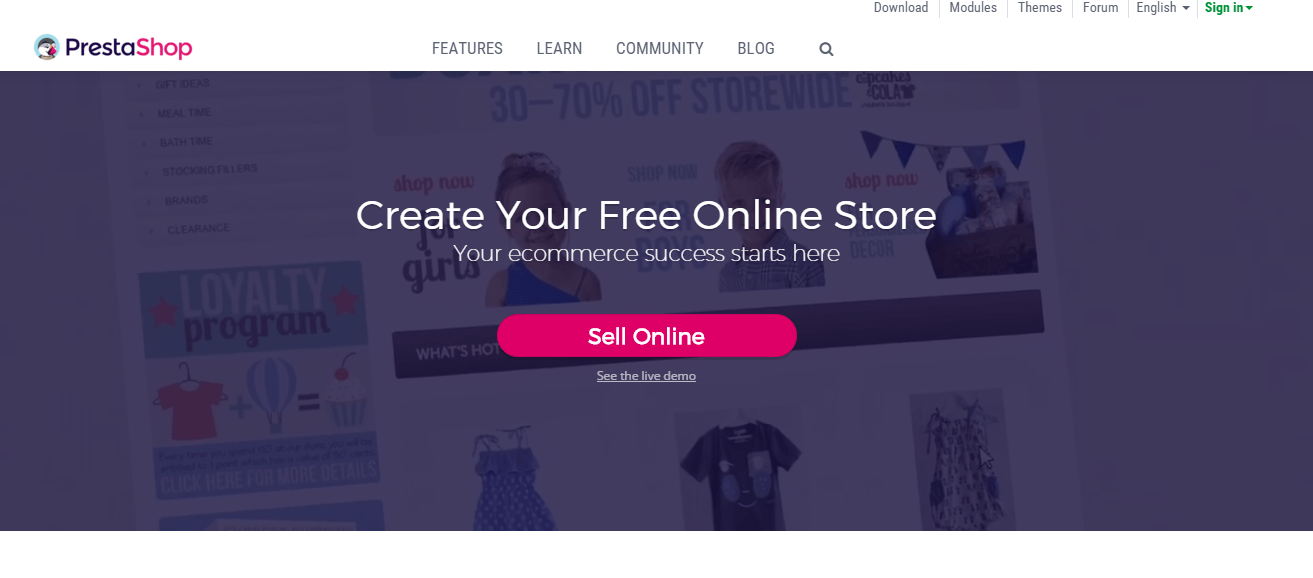
PrestaShop is one of the best e-commerce platforms written in PHP and it holds a template based on the Smarty template. This platform contains above 310 features and more than 2000 modules and templates incorporated. It also allows you to cross-sell products and lets one-page checkout together with low shipping price and sells abroad goods. PrestaShop can be suitable for the one looking for a one-stop store.
Users can easily find plenty of online resources to learn PrestaShop and there’s also an online PrestaShop community which they can join. At the time, more than 250,000 stores used it around the world. This wonderful eCommerce platform can easily customise its theme by simply changing fonts and colours with its live configurator.
WooCommerce (Free)
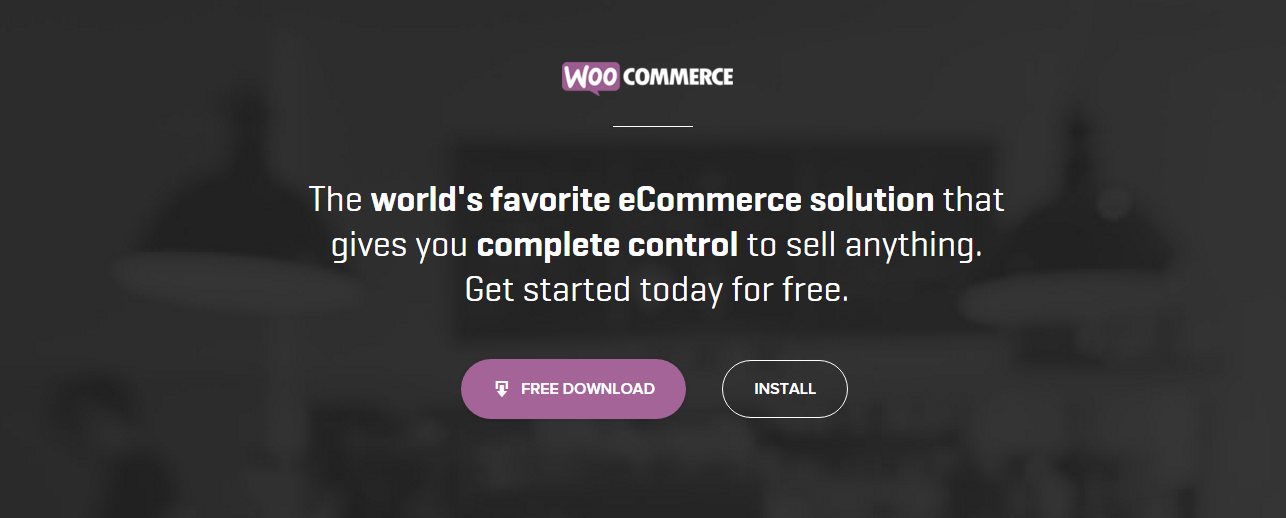
The WooCommerce platform is developed particularly for WordPress user as it transforms your WordPress site into purebred e-commerce solution with no charge. It is extensively praised by many consumers as well as business proprietors due to its simple and easy to use functionality. You can find the basic WooCommerce package without any charge and contains some extensions that make a valuable purchase.
Historical download counts are not a measure of active stores today. WooCommerce adds product, tax, shipping and order tools to WordPress; CRM, accounting and advanced workflows may require extensions or integrations. Check the exact function rather than treating every advertised feature as part of the free plugin.
A WordPress and WooCommerce build can suit a growing store when its content, checkout and integrations need that control. My WooCommerce development page explains how my team assesses that work. It is one option to compare, not the right answer for every growing store.
Magento (Free + Premium)
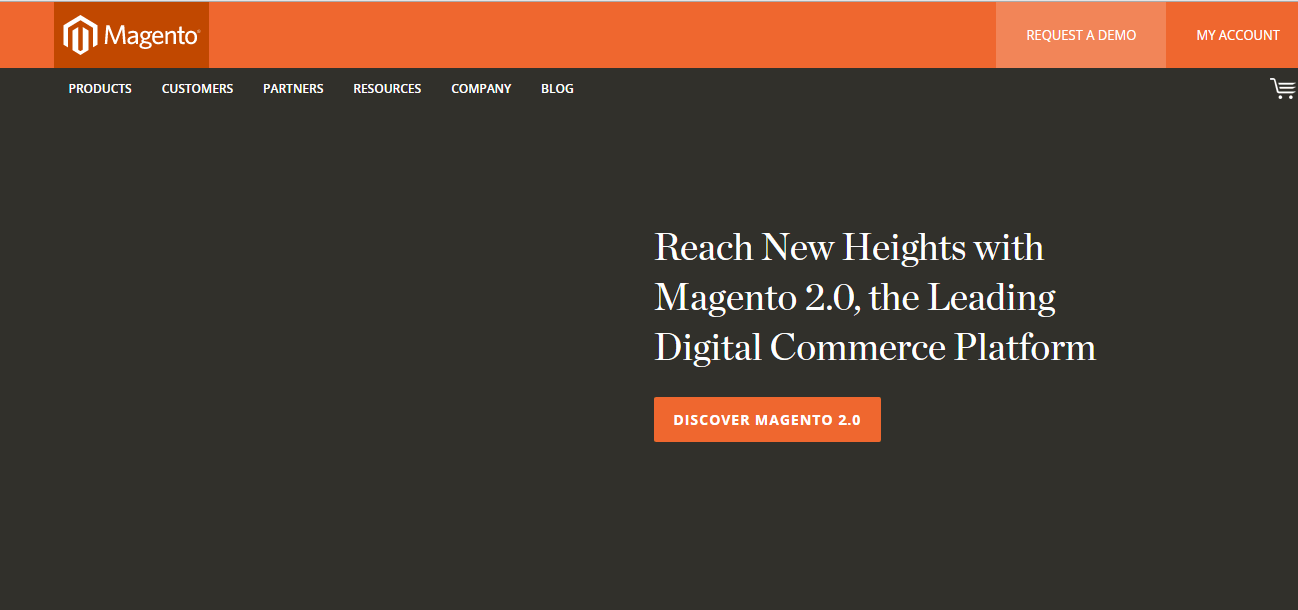
One of the best E-commerce platforms Magento appears with three options among them two are paid edition and customised towards small or large business and the other one is free open source community version. This platform is the most influential platform with a strong character. It has been implemented in most of the shops throughout the internet as it allows easy update of the appearance of the online presence.
Magento is now part of Adobe: Magento Open Source is the free edition, and Adobe Commerce is the paid, licensed one. When this was written, Magento was used by more than 30,000 merchants around the world. It is generally aimed at larger retailers who need more flexible and scalable systems. Basically, Magento is a free platform, but there is also a paid tier available for enterprise users. One of the challenges of Magento is, it requires high-level programming skills to build eCommerce website which is comparatively hard and bothersome.
OpenCart
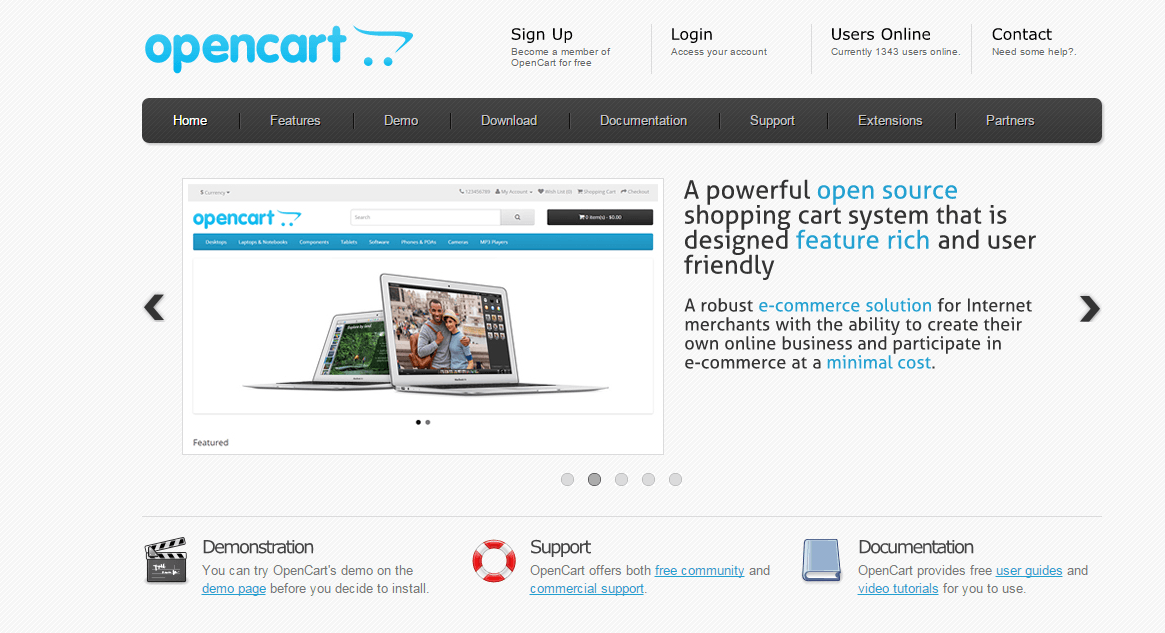
OpenCart is a self-hosted PHP ecommerce platform. Compare the current maintained release, extensions, payment support and developers available to own it. No platform can promise a first-page search ranking from its built-in SEO settings.
OpenCart has everything that is needed to create a simple and scalable professional looking website for small sized businesses. At the time, it powered over 342,000 businesses around the world. OpenCart comes with inbuilt affiliate system, easily expandable functionality and it also allows you to set up your own backups and restorations which you might need in case of emergency.
Big Commerce (Premium)
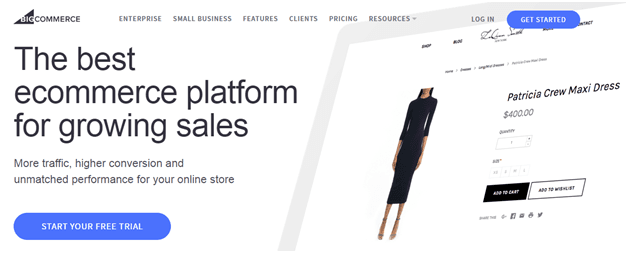
BigCommerce is a hosted ecommerce option. Judge its catalogue, checkout, integration and current plan limits against the actual store. Its feature set does not by itself establish higher traffic or conversion, and customisation still has platform boundaries.
osCommerce (Free)

osCommerce is retained here as part of the original platform history. Before considering it for a new store, confirm its current release, extension maintenance, hosting requirements and support route. An old community discussion does not guarantee that a current technical problem has already been solved.
Yo!Kart (Premium)

When this was written, Yo!Kart was a relatively new multivendor eCommerce system which offers entrepreneurs with an easy way to launch an eCommerce marketplace for their online business. This simple yet powerful eCommerce platform is feature rich and cost effective. It comes with lots of amazing built in features including great designs, best UX design, customizable multivendor eCommerce script, social media integration, reports and analytics insights, multiple payment gateways and much more.
3d Cart (Premium)
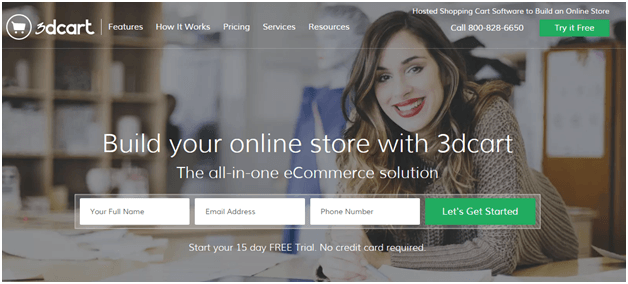
3dCart is now Shift4Shop. Shift4 bought 3dCart in November 2020 and renamed it Shift4Shop in January 2021 (Shift4 announcement). The old 3dcart.com address now redirects to Shift4Shop, which was still offering the platform when I checked in October 2026. When this section was written, 3dCart worked with over 100 payment gateways and was used by more than 17k online stores. Those figures have not been re-checked.
Squarespace (Premium)

Squarespace is another simple yet powerful website builder in today’s eCommerce market. This design-oriented eCommerce platform helps you to build the visually stunning website for your store. It offers beautiful designer quality website templates, extensive styling options, drag and drops functionality, 24/7 1 hour email response support, advertisement free, your own domain name, blog and much more.
Wix (Free + Premium)

You can build a Wix store for free, but customers cannot place orders until you upgrade to a paid plan that accepts payments (Wix Help Center, checked October 2026). Wix has everything that you need to create a visually stunning website. Wix is just the right choice for those who don’t have a lot of time or a big budget for a website design. When this section was written, this easy to use and affordable eCommerce platform was used by more than 90 million people all over the world to build the beautiful yet professional website for their online store. The great thing about Wix is it offers you support 24/7 through phone, email, support centre and so on.
Zen Cart (Free)

Zen Cart is another highly customisable free open source eCommerce platform which allows you a quick setup and customization. Separated from osCommerce shopping cart in 2003, this accessible platform is better suited for medium sized to larger businesses. When this was written, Zen Cart had over 100,000 active users. Another great reason to choose Zen Cart is its great reputation and track record in the market.
Why use eCommerce platforms?
- Quick and Convenient
E-commerce business allows customers to complete transactions from the place they are staying and the transactions mostly occur within the online presence of a store. The transaction does not take much time; it can be done quickly and conveniently.
- Acquire Product Description
Customers can easily acquire details and description of the product online. Before purchasing the product, it is essential to get some information regarding it. Relying on those information customers can make a decision whether to buy the products or go for next one.
- Flexibility and efficiency
E-commerce solution provides flexibility and efficiency handling the complex situation, product ranges and customer profiles effectively. This helps to know your ideal customers and the product that is mostly sold.
- Improve Business reach
Any business that operates offline might face difficulty in reaching an extensive range of customers. Alternatively, e-commerce site enables many businesses to reach the customers within the globe. Most of the people feel easy to shop from the internet and through an e-commerce platform, users can purchase product and service from any place in the globe.
- Decrease the cost of inventory management
Through e-commerce business, vendors are able to reduce the cost of inventory management as they can easily mechanise inventory management employing web-based management system. This will save their operational cost and can utilise the cost to make their business more productive.
There is no single best platform. Use the decision table and five questions, then rehearse a representative product, order, failed payment and refund in sandbox or test mode with safe data. Check the records across stock, payments and accounting. Any necessary live transaction needs its own authorised plan. The right platform is the one that meets those requirements and has a named owner after launch.
Choosing a platform for your online store? Book a free call with my team.