
For more than a decade, WP Creative has built its reputation quietly in Australia.
The company didn’t grow through hype or aggressive expansion. Instead, it focused on a narrow problem many marketing teams struggle to articulate, let alone solve: what happens after the click.
As performance marketing budgets increased and expectations rose, one pattern kept repeating.
Agencies were driving traffic effectively, but websites were failing to convert that traffic into meaningful business outcomes. Load times lagged. Tracking broke. Landing pages became bottlenecks. And when revenue stalled, the blame rarely landed on the website.
That gap, between strong acquisition and weak post-click performance, became WP Creative’s focus.
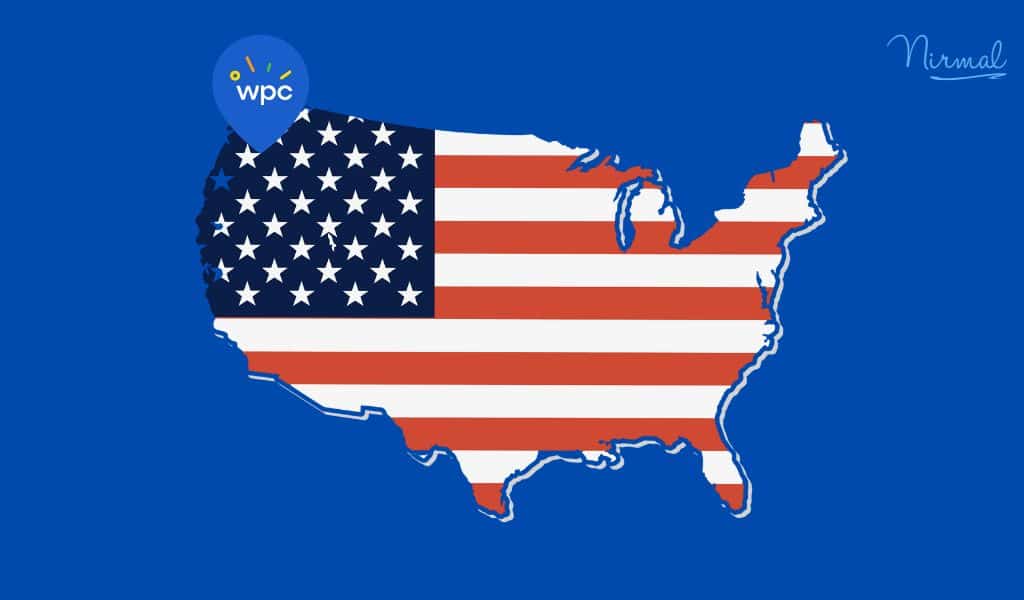
Now, after refining its model across hundreds of engagements in Australia, the company is expanding into the US.
A Problem Performance Marketing Can’t Solve Alone
Modern performance agencies are measured on outcomes such as leads, revenue, and growth. Yet most only control activity up to the click.
Once traffic lands on a website, performance often degrades due to factors outside the agency’s control: technical debt, slow infrastructure, unreliable tracking, or development workflows that cannot keep pace with campaign velocity.
In Australia, WP Creative positioned itself to operate in that gap. Rather than competing with agencies or selling one-off website projects, it worked behind the scenes as a long-term technical partner, owning website performance as an ongoing system, not a one-time deliverable.
This positioning proved effective. The company earned more than 100 five-star reviews, ranked as Australia’s top WordPress agency on Clutch, and partnered with over 100 marketing and performance agencies.
More importantly, it validated a clear product–market fit.
From Web Agency to Web Performance Specialist
WP Creative no longer positions itself as a traditional web agency.
The company has evolved into a web performance agency, focused not on launches or one-off builds, but on how websites perform once marketing is live.
Its role is deliberately narrow and outcome-driven: to ensure websites are fast, reliable, measurable, and capable of supporting modern acquisition campaigns at scale.
This includes ownership of website speed, Core Web Vitals, tracking accuracy, landing page execution, ongoing maintenance, security, tech support, and continuous post-click optimisation. WP Creative does not run ads or replace marketing strategy. Instead, it operates as a long-term performance partner, ensuring the website never becomes the constraint.
This shift reflects a broader change in how marketing-led organisations view their websites, not as static assets, but as systems that must perform every day.
Marketechs™: Where Marketing and Tech Execution Meet
WP Creative operates as a team of Marketechs™, specialists who blend marketing thinking with deep technical execution.
Most web teams understand code but not campaigns. Most marketing teams understand growth but not infrastructure. Marketechs sit in that space.
They prioritise work based on impact, not tickets. They understand how load speed affects conversion, how tracking integrity affects decision-making, and how small technical delays can derail live campaigns.
This hybrid capability has become central to WP Creative’s model, particularly in its work alongside performance marketing agencies, where speed, clarity, and execution discipline are non-negotiable.
The WPO Framework™: A System for Website Performance
After years of reactive work across different sites, WP Creative built the WPO Framework™ (Web Performance Optimisation Framework) to replace ad-hoc fixes with a structured methodology.
The framework follows four stages:
Stabilise → Diagnose → Optimise → Scale
It provides a clear path for improving website performance in a measurable, repeatable way. Rather than chasing isolated fixes, teams work through prioritised improvements that compound over time.
This framework now underpins how WP Creative delivers its services, collaborates with partners, and scales internally.
Simplifying Before Scaling
Before expanding internationally, WP Creative made a deliberate decision to simplify.
Through customer research and delivery analysis, the company reduced complexity across its offering. Services were consolidated into clear, outcome-led monthly plans. Onboarding, prioritisation, and delivery were systemised. Work was aligned more tightly to outcomes rather than activity.
The result was a subscription-style web performance model designed for marketing-led organisations and performance agencies, not ad-hoc development or one-off projects.
This simplification made the business more scalable and clarified where it fit in the broader marketing ecosystem.
Why the US Market
Conversations with US-based performance agencies revealed the same underlying issues seen in Australia: strong acquisition, weak post-click performance, and unclear ownership of the website.
The difference was scale. In the US market, budgets are larger, timelines are shorter, and the cost of technical friction is higher.
WP Creative is entering the US deliberately, starting on the West Coast and leading with partnerships rather than direct selling. A US Partnership Manager based in Seattle, Washington, has been appointed to focus on agency relationships, market feedback, and local alignment.
The goal is not to replace agencies, but to support them, providing the technical performance layer that allows campaigns to scale without friction.
A Clear Vision for the Next Phase
WP Creative’s expansion is anchored in a simple goal:
“To empower 500 marketing teams at scaling brands who struggle daily with underperforming websites.”
These are teams under constant pressure to deliver results, often with strong traffic and solid strategy, but held back by slow load times, fragile tracking, and websites that cannot keep pace with growth.
The company’s focus over the coming years is to support these teams through a clear, systemised approach to web performance — one that removes friction, restores confidence, and allows marketing to compound rather than stall.
This vision has shaped every recent decision: simplifying offerings, refining the WPO Framework™, investing in partnerships, and expanding into markets where this problem is most visible.
The US expansion is not about scale for its own sake.
It is about bringing a proven web performance model to marketing teams who need it most.
 Shankar Subba
![Best WordPress Maintenance Companies in Seattle [Expert Picks]](https://www.nirmal.com.au/wp-content/uploads/2026/02/Best-WordPress-Maintenance-Companies-in-Seattle-800x600.jpg)